
The Right Way to Give Helpful, Actionable Advice
Offering advice is one of those things that seems simple—until it isn’t. Whether you're aiming to lead a team, coach someone toward growth, or build trust as an entrepreneur, learning how to offer guidance that truly resonates is a crucial skill.
But when you deliver advice poorly, the consequences can be serious. You risk sounding patronizing, offending the other person, or worse—completely missing the opportunity to help them take meaningful action. And in a world full of noise, advice that doesn't land is just another empty soundbite.

What Is Logic and How Does It Work?
Logic is the disciplined exploration of reasoning—the structured investigation of how conclusions follow from premises in a valid and coherent way. In essence, logic studies the skeleton of arguments, focusing on the form that makes an inference valid rather than the specific content involved. A valid inference is one in which the conclusion is supported purely by the logical connection with the starting assumptions.

What Am I Supposed to Do With My Life?
We all face that one haunting, persistent question at some point—or maybe several points—in life: What should I actually be doing with my time here? It’s not a one-time reflection, either. This is the kind of question that revisits us during different chapters—after school, during a midlife reflection, after a breakup, during a career shift, or in the stillness of a sleepless night.
Sometimes, you hit a fork in the road and feel completely unsure of which way to turn. Other times, you just get the sense that life’s moving... but you’re standing still. You might feel lost in a maze of too many choices—or trapped by the idea that there’s nothing at all within your reach.

The Bright and Dark Sides of Jealousy
Whether it creeps in quietly or strikes like a storm, jealousy has a way of altering the dynamics of a relationship—sometimes in helpful ways, but often in harmful ones. It usually surfaces when we feel a potential threat to something—or someone—we deeply care about. Imagine your partner laughing a little too comfortably with someone else, especially someone who seems a bit too interested. Even if they reassure you with words and affection, the uneasiness stays lodged in your chest, whispering suspicions and raising invisible alarms. This emotional cocktail can leave you confused, insecure, and tense. But before you label jealousy as entirely bad, it's worth exploring its dual nature.
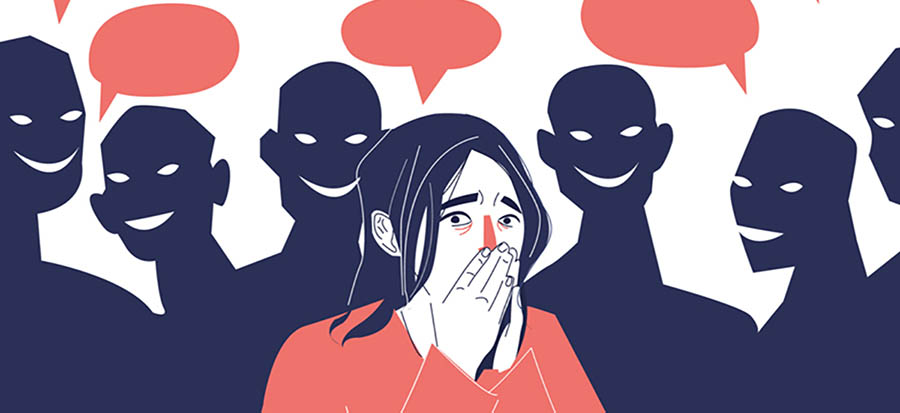
Social Anxiety and the Fear of Being Judged
Do you feel an overwhelming fear of being negatively evaluated by others? Do you freeze up or feel deeply uncomfortable in ordinary conversations or everyday interactions? If you find yourself dreading simple social encounters—like meeting new people, answering questions in a group, or even just chatting with a cashier—and this feeling has persisted for six months or more, it might be more than shyness. You could be dealing with social anxiety disorder, a condition that silently disrupts the lives of millions.

How to Know If It’s Worth Staying or Time to Let Go
We’ve all faced it—that haunting, quietly persistent question: Should I stay, or is it time to leave?
Whether it’s a job that’s no longer inspiring, a relationship that feels more draining than loving, a city that once felt like home but now feels unfamiliar, or a project that no longer excites you—the inner tug-of-war between staying put and making a change is a universal experience.

How to Respond When Someone Insults You
Insults—whether subtle jabs or blatant verbal attacks—have the power to pierce through your confidence and shake your sense of self. They don’t just sting in the moment; if left unaddressed, they can leave long-term damage in the form of diminished self-worth, social anxiety, and even depression. Whether someone throws a rude remark at you during a meeting, mocks your appearance in passing, or excludes you in a way that feels deliberate, the impact can ripple far beyond that instant.

Why People Ignore You and What You Can Do About It
When someone suddenly starts ignoring you, it can feel like you've been dropped into emotional quicksand. Confusion starts to creep in. Your mind races through worst-case scenarios. And most of all, you begin to question yourself: Did I say something wrong? Did I miss something?
The truth is, being ignored isn’t just a silence—it’s a scream you’re left trying to decode. Whether it's a close friend, someone you're dating, a family member, or someone you admired deeply, the emotional impact of being shut out hits hard. You begin to carry not only the ache of being left in the dark but also the weight of assumptions and self-blame.

20 Brilliant Minds That Transformed Philosophy Forever
Every era has its visionaries—those rare individuals who dared to question the obvious, dismantle old beliefs, and construct bold new ideas about life, reality, truth, and the human condition. These weren’t just thinkers confined to ivory towers. They were revolutionaries of the mind, shaking the foundations of how we perceive everything from existence to ethics, from knowledge to power.